

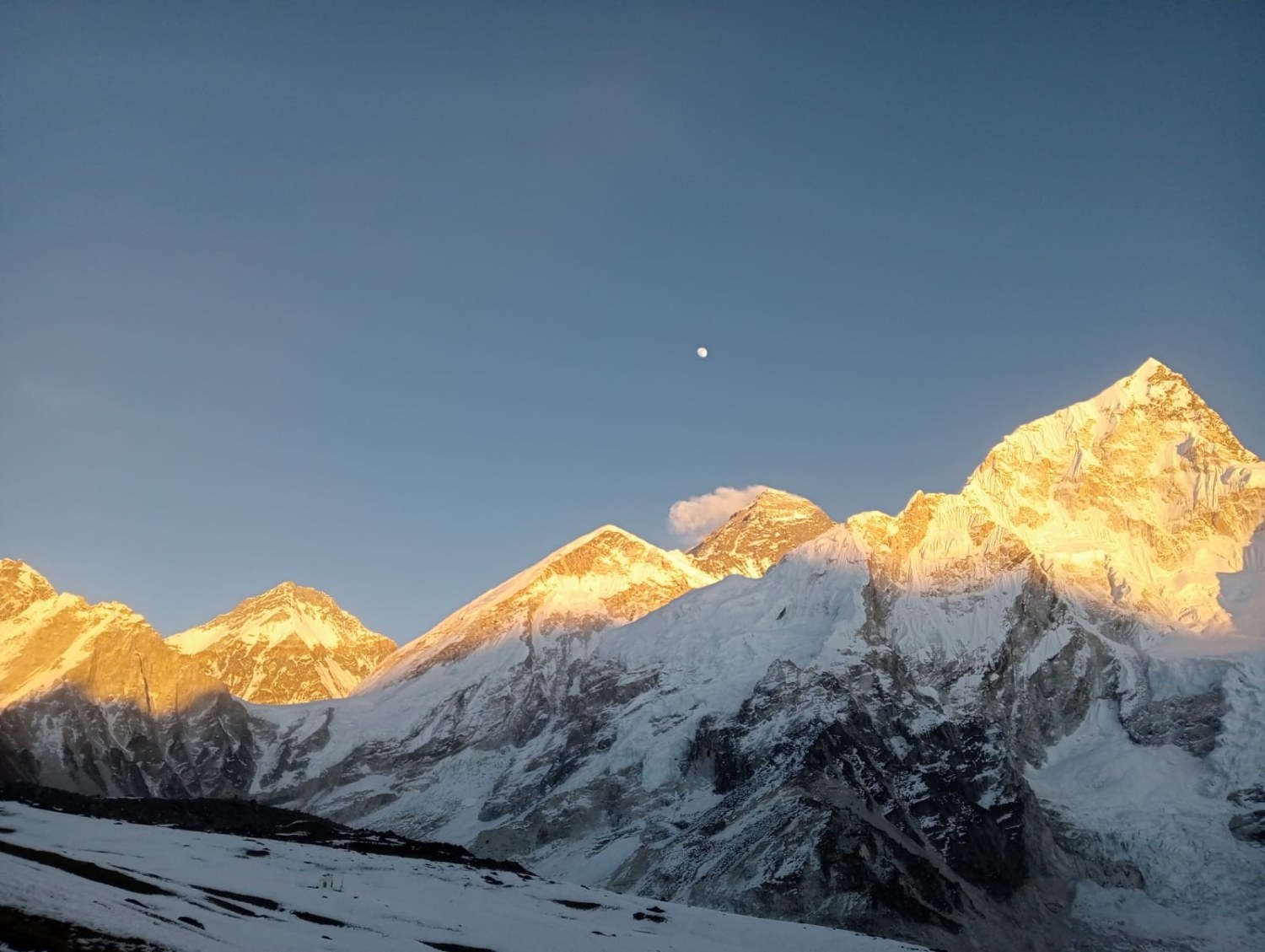
Everest Base Camp Trek Cost 2026/2027: Complete Price and Budget Guide
The Everest Base Camp Trek cost in 2026/2027 starts from USD 1,300 for budget options, while a standard 14-day guided trek costs USD 1,690-2,000 per person. Private treks range from USD 1,890-3,090, luxury itineraries run from USD 4,890 to 6,500+, and helicopter-return packages cost more because of the added flight.
The trekking package is not your complete Nepal travel budget. International airfare, Nepal visa, travel insurance, trekking equipment, tips, Wi-Fi, hot showers, charging, snacks and unexpected expenses are usually paid separately. This guide breaks down the Everest Base Camp trek price and the extra expenses so you can work out how much money you will need before leaving for Nepal.
Everest Base Camp Trek Cost at a Glance
Trek style | Approximate cost per person | Suitable for |
|---|---|---|
Budget trek | From USD 1,300 | Experienced trekkers and budget travelers |
Standard guided trek | USD 1,690-2,000 | Most first-time EBC trekkers |
Private trek | USD 1,890-3,090 | Couples, families and private groups |
Luxury trek | USD 4,890-6,500+ | Travelers seeking greater comfort |
Helicopter return | USD 2,390-4,890 | Travelers wanting a shorter return journey |
These are planning ranges, not fixed prices for every departure. The final amount depends on the itinerary, season, group size, accommodation and services included. A lower advertised price can also mean that flights, meals, porter service, Kathmandu accommodation or other expenses sit outside the package.
Why Budget Planning Matters
Separate the price of the trekking package from the money you will spend yourself. A package may cover the major arrangements, but drinks, charging, Wi-Fi, showers, tips and personal purchases continue throughout the trek.
A clear budget also makes it easier to compare itineraries. Two packages may follow a similar route but include different flights, accommodation, meals, porter services or Kathmandu arrangements, so the cheaper headline price is not always the cheaper trip.
Keep three separate amounts: the trekking package, personal spending and an emergency reserve. A delayed Lukla flight, an extra night in Kathmandu or slower acclimatization can all raise the final cost.
Before budgeting, it is also worth understanding the physical demands. Read our guide to Everest Base Camp Trek Difficulty for altitude, walking hours, terrain and acclimatization.
Everest Region Trekking Packages and Their Costs
The Everest region offers more than the classic route to Base Camp. Some travelers want a short walk with views of Everest, while others prefer Gokyo Lakes, the three high passes, a longer approach from Jiri or a helicopter flight after reaching Base Camp.
Package | Starting cost (per person) | Duration |
|---|---|---|
USD 1,690 | 14 days | |
USD 1,500 | 12 days | |
USD 1,400 | 10 days | |
USD 2,200 | 10 days | |
USD 1,490 | 16 days | |
USD 2,090 | 17 days | |
USD 1,790 | 15 days | |
USD 2,390-4,890 | 10 days | |
USD 4,890 | 10 days | |
USD 5,690 | 11 days | |
USD 5,890 | 11 days | |
USD 1,190 | 9 days | |
USD 1,390 | 15 days | |
USD 1,790 | 10 days | |
USD 1,990 | 22 days | |
USD 1,150 | 23 days | |
USD 3,000-4,500 | 17 days | |
USD 1,290 | 4-5 hours |
Published prices can change with the season, group size, itinerary, and services selected. Check the individual package page before booking.
The EBC Helicopter Tour is a different experience from a trekking package. It is offered as a group-sharing option from USD 1,290 per person, with a separate Kala Patthar landing option at USD 1,890 per person.
What Determines the Everest Base Camp Trek Cost?
- Number of days. Every extra night adds accommodation, meals, and staff costs. Shortening an itinerary does not automatically make it cheaper, because a short program may involve a helicopter flight.
- Group size. A solo traveler carries a larger share of guide and operational costs, while couples and small groups can share porter and other costs.
- Independent or guided. An independent trekker arranges accommodation and meals directly but must manage flights, permits and logistics. A guided package combines these under one booking.
- Accommodation. Basic teahouses cost much less than premium lodges, though luxury options become limited as the trail climbs past the larger settlements.
- Domestic flights. The Lukla flight is a major part of the classic EBC budget, and demand peaks in spring and autumn.
- Optional services. Private guides, upgraded lodges and helicopter flights can raise the cost considerably.
Everest Base Camp Trek Cost Breakdown
Expense | Estimated cost |
|---|---|
Kathmandu-Lukla-Kathmandu flight | USD 520-560 |
Sagarmatha National Park permit | Around USD 30 |
Khumbu Pasang Lhamu Rural Municipality permit | Around USD 30 |
Guide | USD 30-40 per day |
Porter | USD 25-35 per day |
Teahouse accommodation | USD 10-35+ per night |
Food | USD 35-50 per day |
Wi-Fi | USD 3-10 per day |
Charging | USD 2-6 per device |
Travel insurance | Varies |
Personal expenses | Depends on spending |
Do not simply add these together. Many are already included in a standard guided package, listed from USD 1,690 per person.
Kathmandu to Lukla Flight Cost
The Kathmandu to Lukla flight is one of the largest individual expenses on the classic route. A round-trip ticket generally costs around USD 520-560.
During busy trekking periods, flights may operate from Ramechhap Airport in Manthali rather than Kathmandu because of air traffic congestion. That adds a road journey of several hours and can affect the timing of the first trekking day.
Weather matters too. Lukla sits in a mountain environment where conditions change quickly, and a delayed or cancelled flight can mean an extra hotel night or transport change. Check your package terms and insurance before assuming these costs are covered. When comparing prices, ask whether the package includes both domestic flights and any transport to Ramechhap.
Everest Base Camp Trek Permit Cost
The standard route requires two main permits:
- Sagarmatha National Park entry permit: approximately USD 30, subject to government charges.
- Khumbu Pasang Lhamu Rural Municipality permit: approximately USD 30.
Trekkers with an organized company normally have these arranged as part of the package, but check the inclusions before booking.
Guide and Porter Cost
A separately hired guide generally costs USD 30-40 per day, depending on experience, language skills and group arrangements. Beyond leading the route, a guide handles teahouse bookings, daily planning, weather-related decisions and altitude monitoring, and can arrange help if a trekker is struggling.
A porter generally costs USD 25-35 per day. The porter carries your main bag while you carry a daypack with water, warm layers, snacks and medication. Couples and small groups can often share a porter, which lowers the cost per person and keeps the load manageable.
With an organized package from Nepal Himalayas Trekking, guide and porter costs are included according to the selected package.
Accommodation Cost
Accommodation is mainly in family-run Himalayan teahouses. Rooms are simple, with twin beds, mattresses, pillows and blankets, and bathrooms may be shared. Facilities become more basic as the trail climbs: Namche Bazaar has the widest range, while options are limited around Lobuche and Gorak Shep.
Location | Typical room price |
|---|---|
Lukla | USD 10-20 |
Phakding | USD 10-20 |
Namche Bazaar | USD 15-30 |
Tengboche | USD 10-20 |
Dingboche | USD 10-25 |
Lobuche | USD 10-25 |
Gorak Shep | USD 15-30 |
Room prices usually do not cover other services. Hot showers, Wi-Fi and charging are commonly charged separately. They look small individually, but several days of paid services noticeably raise personal spending.
Food Cost
Food becomes more expensive as you climb because ingredients and cooking fuel must be transported farther. If meals are not included, budget around USD 35-50 per day.
- Breakfast: USD 8-12
- Lunch: USD 10-15
- Dinner: USD 10-18
- Tea or coffee: USD 2-5
- Snacks and drinks: extra
Teahouses serve both Nepali dishes and familiar meals, including dal bhat, fried rice, noodles, pasta, pizza, pancakes, Tibetan bread, omelets, garlic soup, potatoes, momos and porridge. Dal bhat is the most dependable choice: filling, familiar across Nepal and well suited to the appetite of a long walking day.
Drinking Water, Wi-Fi, Charging and Hot Showers
- Drinking water: bottled water costs USD 2-6, boiled or hot drinking water USD 2-5. Prices rise with altitude. A reusable bottle and a purification method cut costs and plastic waste.
- Wi-Fi: typically USD 3-10 per day, with less reliable connections higher up. Many trekkers buy it only to message family or check the weather. A local SIM can help where coverage exists, but coverage is not guaranteed along the route.
- Charging: phone USD 2-5, camera battery USD 3-6, power bank USD 3-6. A charged power bank reduces how often you pay.
- Hot showers: roughly USD 3-8 each, less common and more expensive as you climb. Many trekkers shower in the lower villages where facilities are easier to use.
Gear Cost
If you already own suitable boots and warm clothing, there is no need to buy a second set. If you do not trek in cold conditions regularly, rent in Kathmandu.
Equipment | Approximate rental per day |
|---|---|
Down jacket | USD 2-4 |
Sleeping bag | USD 2-4 |
Trekking poles | USD 1-2 |
Duffel bag | USD 1-2 |
Gaiters | USD 1-2 |
Microspikes | USD 2-3 |
Prices vary between shops and by equipment quality. Footwear is different: boots should be comfortable and properly broken in before you start toward Namche Bazaar. Saving money on boots is rarely worth the blisters.
Travel Insurance Cost
Travel insurance is an essential part of your EBC budget. Your policy should specifically cover high-altitude trekking and emergency helicopter evacuation. A policy that covers ordinary travel in Nepal does not automatically cover trekking above 5,000 metres.
Prices vary by age, nationality, trip length, coverage limits and provider. Check the maximum trekking altitude, evacuation conditions and medical cover before buying.
Nepal Tourist Visa and International Flights
The Nepal tourist visa is normally a separate expense:
- 15 days: USD 30
- 30 days: USD 50
- 90 days: USD 125
Visa fees and requirements can change, so check current information before traveling. International airfare is also not included in trekking packages. Because fares depend on your home country, airline, season and booking date, check current return fares from your own city and treat the flight as a separate cost.
Personal Expenses During the Trek
Even with an all-inclusive package, carry money for showers, Wi-Fi, charging, bottled drinks, tea and coffee, chocolate, snacks, bakery items, laundry, souvenirs and tips.
- Budget traveler: USD 150-200
- Standard traveler: USD 200-300
- Luxury traveler: USD 300-500+
Someone who carries a power bank, drinks purified water and rarely buys Wi-Fi will spend far less than someone who buys drinks, snacks and extra services every day.
How Much Cash Should You Carry?
Carry enough Nepalese Rupees before heading into the higher Khumbu. ATM access becomes limited beyond Namche Bazaar, and many small teahouse purchases are still paid in cash. Do not plan your whole personal budget around cards or ATMs, and keep some emergency cash separate from daily spending money.
Extra Nights and Emergency Fund
A delayed Lukla flight, illness, slow acclimatization or an itinerary change can add nights in Kathmandu, Lukla or a teahouse, at around USD 10-35 or more per night. If your budget allows, keep USD 500-1,000 aside as an emergency reserve. It is a cushion, not an expected trekking expense.
Guide and Porter Tips
Tipping is not compulsory in Nepal but is customary and appreciated for good service. The amount depends on trek length, group size, service quality and your own satisfaction. Many trekkers tip at the end of the trek, after reaching Lukla or Kathmandu, and groups often collect contributions and present one joint tip.
Cost by Group Size
- Solo trekker: a higher per-person cost, but more control over the date, pace and guide.
- Two trekkers: porter service and some operating costs can be shared with little loss of flexibility.
- Small group: a good balance of price and personal attention.
- Larger group: can reduce some per-person costs, though the itinerary has to suit everyone's pace.
Private Trek vs Group Joining Trek
Feature | Private trek | Group joining trek |
|---|---|---|
Price | Higher | Lower |
Departure | Flexible | Fixed |
Walking pace | Flexible | Group pace |
Guide | Dedicated | Shared |
Social experience | Smaller | More social |
Best for | Families, couples, friends | Solo and budget travelers |
Cost by Trekking Style
Budget Everest Base Camp Trek (from USD 1,300)
A budget EBC trek suits experienced trekkers who are comfortable with basic accommodation and willing to arrange some services themselves. Before booking, check whether the price includes Lukla flights, meals, a porter, Kathmandu accommodation, permits and airport transfers. A low advertised price does not produce a lower final cost if several of these are paid separately.
Standard Guided Trek (USD 1,690-2,000)
For most first-time trekkers this is the practical balance of price and convenience, because the main arrangements are made before you travel. A standard package generally includes airport transfers, Kathmandu hotel nights, Kathmandu-Lukla-Kathmandu flights, permits, guide, porter, teahouse accommodation, three meals during the trek, and government taxes and service charges.
Private Trek (USD 1,890-3,090)
The price is higher because guide, transport and operating costs are shared among fewer people. In return you control the departure date, walking pace and group. It suits couples, families, friends, photographers and small groups, and it helps when one person needs a slower day.
Luxury Trek (USD 4,890-6,500+)
Higher prices can include premium Kathmandu hotels, luxury mountain lodges, a private guide and porter, better rooms and meals, upgraded transport and helicopter services. Luxury accommodation is not available at the same standard along the whole route, and the choice narrows toward Lobuche, Gorak Shep and Base Camp.
Everest Base Camp Trek with Helicopter Return Cost
A helicopter-return trek costs more than the classic route because the return flight is added.
Helicopter return option | Sharing | Private |
|---|---|---|
Return to Lukla | USD 2,390 | USD 3,290 |
Return from Lukla to Kathmandu | USD 2,990 | USD 4,890 |
This option suits travelers with limited time, those who do not want to walk the whole return route, and those who want an aerial view of the Khumbu. The helicopter operation depends on weather and landing conditions, so exact arrangements can vary.
Cost by Duration
The number of days affects accommodation, meals, staff and transport costs, but duration alone does not set the price. A shorter itinerary can cost more when it involves a helicopter or other premium transport.
Duration | Starting cost |
|---|---|
10 days | USD 1,400 (no acclimatization) / USD 2,200 (short trek) |
12 days | USD 1,500 |
14 days | USD 1,690 |
15 days | USD 1,790 (with Kala Patthar) |
16 days | USD 1,490 (by road) |
17 days | USD 2,090 (with Gokyo Valley) |
Is the 14-Day Trek Worth the Cost?
For first-time trekkers the classic 14-day itinerary is a sensible choice because it allows acclimatization at places such as Namche Bazaar and Dingboche. Shortening the trek reduces teahouse nights but does not always make it cheaper, since some short itineraries rely on helicopter transport or a faster schedule that raises the cost per day.
Cost by Season
Season affects availability and trail conditions more than the package price, so confirm the exact price for your departure date.
- Spring (March-May): one of the busiest periods. Weather is generally favorable and rhododendrons bloom at lower elevations. Book flights and accommodation early.
- Summer / monsoon (June-August): quieter, with more rain at lower elevations. Cloud can affect views and Lukla flights, so allow for weather disruption.
- Autumn (September-November): clear skies and dry trails make this a major trekking season. Flights, guides and lodges fill up in the busiest weeks.
- Winter (December-February): colder and quieter. Snow can affect higher sections and nights are very cold, so be properly equipped.
How to Save Money on the EBC Trek
Savings should not come from cutting services that affect safety or comfort. Decide in advance which extras you actually need.
- Book with a local trekking company. You can ask directly what is included and what you pay for separately.
- Travel with friends. A couple or small group can share guide, porter and operating costs.
- Rent equipment. A down jacket, sleeping bag and poles are much cheaper to rent in Kathmandu than to buy.
- Carry a reusable bottle and a purification method.
- Limit Wi-Fi and hot showers. Both are optional and add up daily.
- Buy snacks in Kathmandu. Chocolate, energy bars and toiletries are cheaper before the higher Khumbu.
- Eat local meals such as dal bhat.
- Book early in peak season for your preferred flights, lodges and guide.
What Is Included in the Cost?
A standard guided package generally covers the main arrangements, though inclusions vary by itinerary, so check the package page before booking:
- Airport pickup and drop-off
- Kathmandu hotel accommodation as per itinerary
- Kathmandu-Lukla-Kathmandu flights
- Sagarmatha National Park permit
- Khumbu Pasang Lhamu Rural Municipality permit
- Trekking guide
- Porter
- Teahouse accommodation
- Three meals during the trek
- Government taxes and service charges
What Is Not Included?
- International airfare
- Nepal tourist visa
- Travel insurance
- Personal trekking equipment
- Drinks, alcohol and bottled water
- Hot showers, Wi-Fi and charging
- Laundry, souvenirs and personal shopping
- Tips
- Extra hotel nights and emergency expenses
Local Company or International Company?
Many international operators work with local Nepali companies to organize the actual trekking services in the Everest region. Booking directly with a local company gives you direct access to the people arranging guides, porters, lodges, permits, flights and logistics. It does not guarantee the lowest price, so the more useful question is what the price includes. Ask:
- Are Lukla flights included?
- Are both permits included?
- Are three meals included?
- Is porter service included?
- Is Kathmandu accommodation included?
- Are airport transfers and government taxes included?
- What happens if the Lukla flight is delayed?
- Is emergency assistance available?
A package with a slightly higher price can offer better value when these services are already covered.
Solo Independent Trek or Trekking With a Company?
Independent trekking can cut some costs for experienced mountain travelers who are comfortable arranging their own accommodation and meals. It also means taking responsibility for flights, permits, lodge availability, route planning and weather disruption. A trekking company bundles these, and for a first EBC trip the extra cost is often worth it because the guide handles daily logistics, speaks with teahouses and can help when the plan changes. A standard guided package of USD 1,690-2,000 sits between arranging everything yourself and choosing a luxury itinerary.
How Much Money Do You Need for the Entire Trip?
The cost of the trek and the cost of the whole Nepal trip are different figures. Here is an example for one trekker on a 14-day standard guided trek who already owns boots and basic cold-weather clothing:
Item | Estimated cost |
|---|---|
Standard guided trek package | USD 1,690-2,000 |
Nepal visa (30 days) | USD 50 |
Rented gear (down jacket, sleeping bag, poles) | USD 70-140 |
Personal spending on the trail | USD 200-300 |
Subtotal | About USD 2,010-2,490 |
International airfare | Depends on your home country |
Travel insurance | Depends on age, nationality and cover |
Emergency reserve (optional but recommended) | USD 500-1,000 |
Someone who already owns all the gear will spend less, and someone buying it new will spend considerably more.
Is the Everest Base Camp Trek Worth the Cost?
The value of the trek cannot be measured by the number of days or the price on the booking page. The route passes through Namche Bazaar, Tengboche, Dingboche, Lobuche and Gorak Shep, with monasteries, Sherpa settlements, suspension bridges, forests and glacial valleys. The classic route reaches Everest Base Camp at 5,364 metres, followed by the early-morning climb to Kala Patthar at 5,545 metres.
You also spend several days living in teahouses and walking through communities whose economy is closely tied to trekking. The guide, porter, lodge owner, cook and driver are all part of the system that makes the journey possible, and a well-organized package pays for the people, accommodation, transport and logistics that support you.
Frequently Asked Questions
How much does the Everest Base Camp Trek cost in 2026/2027?
A budget trek starts from USD 1,300, and a standard guided trek costs USD 1,690-2,000 per person. Private treks cost USD 1,890-3,090, and luxury treks cost USD 4,890-6,500+.
What is the cheapest way to trek to Everest Base Camp?
Budget and independent options reduce the package price, but check what the advertised price excludes. Flights, meals, porter service and Kathmandu accommodation may need to be paid separately.
How much does the EBC trek with helicopter return cost?
A helicopter return to Lukla costs USD 2,390 sharing or USD 3,290 private. A helicopter return from Lukla to Kathmandu costs USD 2,990 sharing or USD 4,890 private.
How much does a Lukla flight cost?
A Kathmandu-Lukla-Kathmandu round trip generally costs USD 520-560. In busy periods flights may operate from Ramechhap instead of Kathmandu.
How much does food cost on the trek?
If meals are not included, allow around USD 35-50 per day.
How much does a guide or porter cost?
A guide costs about USD 30-40 per day and a porter about USD 25-35 per day when hired separately.
How much cash should I take to Everest Base Camp?
Around USD 200-300 worth of Nepalese Rupees is a reasonable personal-spending budget for many standard trekkers. Carry extra emergency money separately.
Is Wi-Fi available on the trek?
Yes, in many teahouses, though it becomes less reliable at higher elevations. It generally costs USD 3-10 per day.
How much does a hot shower cost?
About USD 3-8, depending on the teahouse and location.
Is travel insurance necessary?
Yes. Your policy should specifically cover high-altitude trekking and emergency helicopter evacuation. Do not assume a standard travel policy includes it.
Is the 14-day trek better than a shorter one?
For most first-time trekkers, yes. The 14-day itinerary allows time for acclimatization and avoids rushing through the higher sections.
Is it cheaper to trek independently?
It can be for experienced travelers, but the difference is often smaller than expected once flights, permits, food and other services are added. Compare the complete cost, not the headline package price.
Final Thoughts
The Everest Base Camp Trek cost for 2026/2027 depends on the type of trek and the level of service you want. Budget treks start from USD 1,300, standard guided treks cost USD 1,690-2,000, private treks USD 1,890-3,090 and luxury treks USD 4,890-6,500+. Helicopter-return itineraries cost more because of the added flight.
The package is only one part of your overall budget. Allow for your visa, airfare, insurance, equipment, tips, personal purchases and an emergency reserve. If keeping costs low matters most, compare inclusions before choosing the cheapest package. If you value privacy, comfort or a shorter return, a private, luxury or helicopter-return itinerary may justify the extra expense.
Do not budget only for reaching Everest Base Camp. Budget for the entire journey.
Plan Your Everest Base Camp Trek
Talk with our local travel specialist: Make an Inquiry or chat on WhatsApp +977
Add Your Comment